

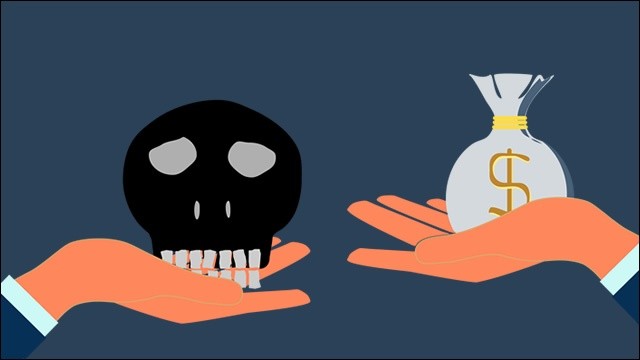
‘Why on earth do we allow this?’
Plea for the tobacco endgame
26 February 2026
As a fellow at the School for Moral Ambition, Eline Goethals wrote a report on communication around the tobacco endgame. In a personal opinion piece, she reflects on her astonishment at an industry that drives millions to their deaths while the profits flow to shareholders.
By Eline Goethals
“Why on earth do we allow this?” That was the question I kept asking myself during my Tobacco Control fellowship at The School for Moral Ambition. As an ex-advertising professional looking for more positive impact (rather than being paid to dream up campaigns selling ready-made lasagnes or cars), I was immersed in the world of the tobacco industry and the tobacco policies trying to rein it in.
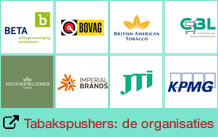
One industry, essentially four major companies, sells products that knowingly will kill half of everyone using them. Try launching a product like that today. And it’s not just deaths: for every person who dies from tobacco, twenty more are living with a tobacco-related illness. From lung and respiratory problems to fertility issues or cataracts, a long list of conditions is caused by nicotine and tobacco. To this day, researchers keep discovering that conditions that once seemed inexplicable can be linked to smoking or secondhand smoke. You don’t even have to smoke yourself to get sick.
This problem affects all of us
And yet, when I started the process of this career switch, I thought smoking wasn’t really that big a problem. That we all knew it was bad for you, and that this was a dying industry. I couldn’t have been more wrong. Only after wading through thick documents full of medical and academic jargon did I begin to grasp how deep this problem runs – how manipulative the industry is on every front, and how much they want us to look the other way. Nothing suits them better than us thinking this is already sorted.
Today I understand that the tobacco problem concerns all of us. How we as a society deal with the tobacco industry is a reflection of how we organise ourselves and how we care for one another. We allow a handful of shareholders to addict us in staggering numbers, make us sick, and kill us. We even consider it an individual problem when people become ill. And yes, ‘free personal choice’ sounds like a tempting argument. But most smokers became addicted before the age of eighteen, before they could make a well-considered choice at all. Addiction is not a weakness, it’s the business model.
Every citizen pays the bill
Yet as a society, every single citizen, we bear all the consequences. The shareholders take the profits. We, you and I, take all the costs and risks. In Belgium, my home country, total costs mount to 1.400 euros per capita that go directly towards tobacco-related illness and death (based on data from research in 2017). Money we could otherwise invest in reducing healthcare waiting lists or building affordable housing.
The tobacco industry doesn’t bring anything good to our society. The excise taxes governments levy on tobacco products are a short-term gain, a sweetener, because they pale in comparison to the total costs to healthcare. And besides, those excise taxes are paid by the smokers themselves, not by the industry. This very system, the one where powerful companies can do as they please with our health and are still far too often invited to the policy table, exposes exactly what is wrong with our economic model. We are not protecting citizens. We are protecting corporate interests.
Economic model
The tobacco industry is not an exception, it’s a blueprint. Other industries such as alcohol, ultra-processed food or dairy copy its techniques and regularly hire the same lawyers and consultants. All to keep growing profits, regardless of the damage to human and planetary health. Understand the tobacco industry, and you understand how this economy works.
We have given an addiction industry far too much power. We have believed them, even after they have demonstrated hundreds of times that they are not worthy of that trust. It is time to put a stop to this. This is not utopia, the tools exist to gradually dismantle their power entirely. Only the political will is missing.
An end to a business model
We call this the tobacco ‘endgame’. Not just the end of the cigarette, but the end of systematically addicting people as a business model. The industry loves to present itself as being on the right side of history by claiming to support “a phaseout of the cigarette” too. They only say this because with their vapes, heated tobacco products, and nicotine pouches they have found an even more efficient way to addict teenagers and children. Not because they care about public health. This is not an assumption but a fact, supported by leaked internal documents.
We need to talk far more about the end of the tobacco industry. We need to stop pretending this is normal. What we allow a handful of wealthy shareholders to do –addict billions of people, make them sick, let them die – is not a side effect of our economic system. It is our capitalistic system, in its most naked form. If we cannot stop this, what can we stop?
Our words matter
In collaboration with Action on Smoking and Health, Johns Hopkins Bloomberg School of Public Health, and The School for Moral Ambition, I wrote the report TabakNee discussed yesterday that outlines the problem and explores how we can build greater political and public will. Because language normalises – but language also activates. The words we choose about tobacco play a role in determining when this will end. Read it, draw inspiration, pass it on. Because surely, we simply cannot allow this to continue?
The full report can be found on ash.org.
tags: ASH | public health | Tobacco Endgame | School for Moral Ambition | nicotine industry






 Stichting Rookpreventie Jeugd is geregistreerd als Algemeen Nut Beogende Instelling (RSIN: 820635315 | KvK: 34333760).