

Students vape at night and are more likely to be hospitalized
08 December 2025
Two coinciding reports show the seriousness of the situation regarding nicotine use among young people in the Netherlands. A third of vaping school students also do so at night, and the number of reports of hospital treatments because of vaping has doubled in a year.
By the web editors
The number of reports of children who ended up in hospital with complaints caused by vaping has doubled in the past year. The hotline for vape-related recordings, which started two years ago, registered 31 reports this year. Last year there were 14. The symptoms were the same: coughing up blood, severe shortness of breath requiring extra oxygen, a collapsed lung and palpitations. One patient was admitted to intensive care with a severe asthma attack due to vaping. Two minors in whom a ‘very large amount of nicotine’ was found had to be treated for drowsiness and unconsciousness. According to paediatric pulmonologist Marije van den Beukel of the Haaglanden MC, the reports are the tip of the iceberg, she told Nu.nl.
15,000 puffs in four days
Van den Beukel is the initiator of the hotline, which she started at the end of 2023 on behalf of the Dutch Association of Paediatrics, section of paediatric lung diseases, because doctors were increasingly seeing children with complaints that could only have been caused by vaping. In most cases this year it concerned reports from 14- to 17-year-olds. One “shocking case”, according to Van den Beukel, involved a child who had finished a 15,000-puff vape in four days. The amount of nicotine in such a ‘turbo vape’ is comparable to 15 to 20 packs of cigarettes.
The pulmonologist says that the number of reports about psychosocial effects was also striking. This ranged from a teenager with debts to a vape dealer to depressive symptoms and attempted suicide. The fact that complaints can be related to vaping is now better recognized by doctors, so they are also more alert to it. Nevertheless, Van den Beukel suspects that the actual number of vaping-related complaints is much higher, but that not everything is reported, for example because it concerns milder complaints.
Half of respondents have ever smoked
That the number of vaping-related disorders will increase rapidly seems inevitable when you read the figures of a study by the Leiden University Medical Center in collaboration with the Vapen #jouwkeuze prevention program and the Trimbos Institute, published in the European Journal of Pediatrics. At five secondary schools, the researchers collected data from 978 students with an average age of 14.5 years, of whom almost half (457) reported having used nicotine at some point. Of those 457, 90 percent had used nicotine in the last year.
The median age of first use was 13 years. 80 percent started nicotine use with e-cigarettes, 18 percent with cigarettes and 2 percent with nicotine pouches. Almost half (47 percent) of the students who had used nicotine in the last year (just under 200 students) indicated that they used nicotine daily. Of that group, 70 percent reported dual use of e-cigarettes and traditional cigarettes and 77 percent said they used nicotine during school hours.
Nocturnal nicotine use
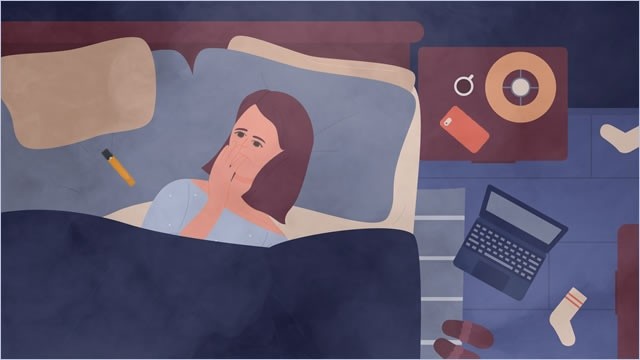
Particularly worrying is the finding that more than a third of the students who had used nicotine in the past year indicated that they also used nicotine at night when they woke up (26 percent answered ‘yes’ and 9 percent ‘sometimes’). Nighttime use may be a sensitive indicator of nicotine dependence, the researchers write, indicating both physiological withdrawal symptoms and psychological stress.
In the group that had used nicotine in the past year, 32 percent indicated that their parents were not aware of the use, 41 percent saw themselves as addicted and 60 percent reported a quit attempt, of which more than three-quarters (77 percent) had not succeeded.
Furthermore, 61 percent mentioned health complaints related to nicotine use. The complaints consist of reduced physical fitness (43 percent), coughing (32 percent), sore throat (30 percent), concentration problems (21 percent), headaches (20 percent), nausea (19 percent) and sleep disturbances (16 percent). Depressive symptoms (12 percent), anxiety or panic (10 percent), asthma attacks (5 percent) and pneumonia (4 percent) were mentioned less frequently.
Quitting help in schools is needed quickly
Based on these figures, the researchers conclude that there is substantial nicotine dependence among students in the Netherlands. Daily and dual use, at school and during the night, in many cases without parents knowing about it, while 6 out of 10 vapers/smokers experience physical and/or psychological complaints makes intervention urgent. There is a clear need to introduce parent-involved quit assistance programs in schools, along with policies that curb the influence of the tobacco industry and limit young people’s access to nicotine. That is exactly what the Youth Smoking Prevention Foundation has been advocating for years: no influence of the tobacco industry on policy (FCTC article 5.3), tackling marketing aimed at young people, banning dealers from social media and bringing forward the exclusive sale of nicotine products through tobacco shops to 2028 (instead of 2032) in combination with a licensing system. If the age limit for the purchase of tobacco and related products is also raised by one year every year from 2030, the nicotine-free generation will come within reach.
If you want to keep updated on TabakNee’s news in English, sign up to our monthly newsletter in English.
tags: quit vaping | vape-hype | Youth Smoking Prevention | healthcare | nicotine addiction








 Stichting Rookpreventie Jeugd is geregistreerd als Algemeen Nut Beogende Instelling (RSIN: 820635315 | KvK: 34333760).