

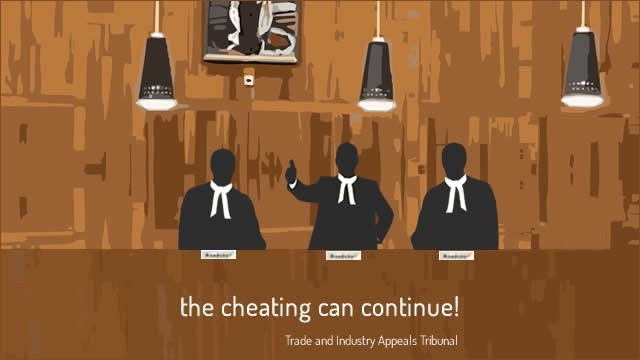
Rigged cigarette will continue to exist for the time being
14 October 2026
The measurement method used to measure the tar, nicotine and carbon monoxide emissions of filter cigarettes does not need to be adjusted for the time being. That is the final verdict in the enforcement case that Youth Smoking Prevention started in 2018. It is now up to the European Commission to bring about change in the current practice.
By the web editors
The rigged cigarette may remain for the time being. That is the final result of the enforcement case that Youth Smoking Prevention (YSP) started in 2018. In its judgment yesterday, the Trade and Industry Appeals Tribunal (CBb) states that the maximum emission levels of tar, nicotine and carbon monoxide from filter cigarettes must be measured according to the ISO methods prescribed in the EU Tobacco Products Directive (TPD).
‘Not unexpected, but still disappointing’
“After the judgment of the European Court of Justice in Luxembourg on April 21 of this year, this judgment is not unexpected,” says Wanda de Kanter, president of YSP. “But it is very disappointing that this case ultimately failed on a legal detail, while the substantive assessment of our question was omitted. The tobacco companies can continue with their cheating practices, making filter cigarettes both more addictive and more harmful to health than European regulations allow. The National Institute for Public Health and the Environment has established this conclusively in the context of this procedure.”
Flaw in EU legislation
There is a flaw in the European legislation on the maximum emission levels because it prescribes a measurement method that enables tobacco manufacturers to influence the measurements. First, the TPD sets maximum emission levels of 10 mg tar, 1 mg nicotine and 10 mg carbon monoxide. This with the apparent intention of providing some protection for the health of smokers.
Holes in filter affect measurement
On the other hand, the ISO method is prescribed for determining the emission values, which was largely designed by the tobacco industry itself. The ISO method enables tobacco manufacturers to influence the results by piercing tiny holes in the filters of cigarettes. During the measurement, air mixes with the smoke through those holes, resulting in lower values. Smokers cover the holes with fingers and lips and therefore ingest more than the permitted amounts of harmful emissions.
Court of Appeal and District Court ruled in favour of YSP
Initially, the European Court of Justice and then the District Court in Rotterdam ruled in favour of Youth Smoking Prevention. The Netherlands Food and Consumer Product Safety Authority (NVWA) was instructed to take enforcement action against cigarettes that did not meet the emission standards. In practice, all filter cigarettes.
ISO standards never published
However, the NVWA and the Ministry of Health, Welfare and Sport appealed this ruling, even though both want to achieve the same as YSP. The CBb turned to the European Court for a second time in this case. In the first case before the Court, it was argued that the ISO standards were never published in the Official Journal of the European Union.
As a result, citizens cannot know the content of the ISO standards. In fact, they only have to deal with the 10-1-10 emission standard and can demand that it be enforced with a proper measurement method.
Legal hair-splitting
However, the European Court now stated that YSP had taken note of the ISO standards in question in the library of the standards institute in the context of these proceedings. And with that, YSP would have forfeited the right to demand a different, sound measurement method. A legal hair-splitting, which leaves the substantive core of the case untouched.
The ball is in the European Commission’s court
The YSP case has now come to an end. On the positive side, the case may have focused the spotlight on a contradiction in European legislation on this point. The European Commission already received an incentive from the Vice-President of the Court to do something about this during the oral hearing of the case at the European Court. Whether the European Commission takes this call to heart will become clear when it presents its proposal for the revision of the TPD at the end of this year. And otherwise, there is always the possibility that someone who has not seen the ISO standards will start their own procedure.
View the complete procedure in the lawsuits section on youthsmokingprevention.nl
tags: ISO-methode | filterventilatie | Youth Smoking Prevention | lawsuit | European Court | tnco | rigged cigarette








 Stichting Rookpreventie Jeugd is geregistreerd als Algemeen Nut Beogende Instelling (RSIN: 820635315 | KvK: 34333760).